
Get Free Ebook Jefferson Davis, American
Well, when else will you find this possibility to obtain this book Jefferson Davis, American soft documents? This is your excellent chance to be below and also get this fantastic publication Jefferson Davis, American Never ever leave this publication prior to downloading this soft file of Jefferson Davis, American in link that we offer. Jefferson Davis, American will really make a good deal to be your friend in your lonely. It will certainly be the very best partner to enhance your business and leisure activity.
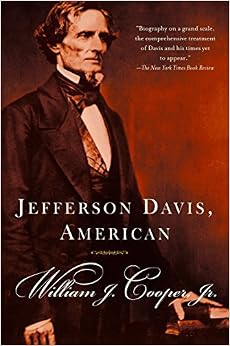
Jefferson Davis, American

Get Free Ebook Jefferson Davis, American
Do you believe that reading is a vital activity? Find your reasons why adding is essential. Reading an e-book Jefferson Davis, American is one part of delightful tasks that will make your life high quality better. It is not regarding simply what sort of book Jefferson Davis, American you check out, it is not just concerning how lots of books you check out, it's about the routine. Reviewing behavior will certainly be a way to make publication Jefferson Davis, American as her or his pal. It will regardless of if they invest cash and invest even more publications to finish reading, so does this e-book Jefferson Davis, American
We know and recognize that occasionally books will certainly make you really feel bored. Yeah, spending often times to only read will specifically make it real. Nevertheless, there are some methods to overcome this problem. You can just invest your time to read in few pages or only for loading the extra time. So, it will certainly not make you really feel bored to constantly deal with those words. And also one crucial thing is that this publication uses extremely intriguing topic to check out. So, when reading Jefferson Davis, American, we make sure that you will not find bored time.
The benefits that you can gain from reading kind of Jefferson Davis, American will remain in some ways. Discover this publication as your chosen analysis product that you really wish to do. After searching for some shops and have actually not found it, now this is your best time to get it. You have actually found it. This soft data publication will certainly encourage you reviewing practice to expand faster. It's due to the fact that the soft file can be checked out conveniently in any time that you wish to check out as well as have prepared.
Even the data of the book is in soft data, it doesn't indicate that the material is different. It only sets apart through guide presented. When you have the soft data of Jefferson Davis, American, you can really easy saving this documents into some particular devices. The computer, device, and also laptops are suitable sufficient to conserve the book. So, anywhere you are, you can be available to establish the time to review.
From the Inside Flap
From a distinguished historian of the America South comes this thoroughly human portrait of the complex man at the center of our nation's most epic struggle. Jefferson Davis initially did not wish to leave the Union-as the son of a veteran of the American Revolution and as a soldier and senator, he considered himself a patriot. William J. Cooper shows us how Davis' initial reluctance turned into absolute commitment to the Confederacy. He provides a thorough account of Davis' life, both as the Confederate President and in the years before and after the war. Elegantly written and impeccably researched, Jefferson Davis, American" is the definitive examination of one of the most enigmatic figures in our nation's history.
Read more
From the Back Cover
"Biography on a grand scale, the most comprehensive treatment of Davis and his times yet to appear."--Los Angeles Times Book Review"[L]ikely to be the standard life from now on."--The New York Times Book Review"Definitive... Bring[s] Davis back to life in all of his complexity and subtleties."--The Christian Science Monitor
Read more
See all Editorial Reviews
Product details
Paperback: 848 pages
Publisher: Vintage; 1st edition (November 13, 2001)
Language: English
ISBN-10: 0375725423
ISBN-13: 978-0375725425
Product Dimensions:
5.2 x 1.6 x 8 inches
Shipping Weight: 1.6 pounds (View shipping rates and policies)
Average Customer Review:
4.4 out of 5 stars
66 customer reviews
Amazon Best Sellers Rank:
#141,563 in Books (See Top 100 in Books)
This is a balanced character development of one of the few truly great American Presidents. Yes Davis and the Confederacy were both American. Lincoln pales to nothing compared to the contributions Davis made to build our country. While Lincoln spent ten years to become another American President Davis spent his time building up a nation that would bring him down. Soldier, government servant, constitionalist and contributor to the United States. Davis' life is detailed in this balanced account of one man's life. It reveals his contributions, victories and defeats. His view of what the government was intended to be by the founding fathers was not wasted on him. While Lincoln was for a strong central government Davis was for a Union of independent states subservient only to themselves. If you do not understand how our government works you will never understand this American President. Was she perfect? No. As they say nothing good comes from Kentucky-both Lincoln and Davis came from there. Both suffered the loss a child during the war. Both faced defeats and victories. The book takes you from Davis' early years being schooled at St Thomas Acquinas College,his life at West Point, to the Mexican War, plantation life, his race relations, service in being the driving force in designing the Capitol buildings, modernizing the army and to his finally days. It explores his life through the eyes of others as well as his family. After reading this yo will have a clear view of Davis the man and Davis the politician. Who was the better president? I believe after reading this Davis was hands down.
Perhaps few individuals in history, and certainly among Americans, are as equally viled and beloved at the same time as Jefferson Davis. Jefferson Davis, born in Kentucky, just a few miles away from along another great man he would be forever associated with, Abe Lincoln, and grew up in Mississippi. He proclaimed a deep love for his adopted state; the South, with all its traditons and culture; and for America. He was considered one of the great political minds of his time (often compared to another great Southeners, John C. Calhoun) and quite handsome and charming. He was an outstanding Senator and often consider a possible future US President. Yet, it was as President of the Confederate States of America that he would earn his notoriety; an office he didn't want as the result of a series of events he fought against and prayed would never happen (he regarded it as the saddest day" of his life). He was a graduate of West Point, the son of an American Revolutionary hero, and a veteran of the Mexican-American War. He was also a man of deep religious faith.Author William J Cooper Jr did an outstanding job in bringing this tragic American Icon to life with all his charm and flaws. His protrayal of Davis is both balanced and objective, and comes complete with many of the untold stories of his life such his love for those enslaved by him and by a system he privately disliked. Here we get more than just a glimpse of the man, we get a real sense of who he was and, perhaps, what he could have been.At 706 pages including the Epilogue, this is an excellent biography of a grand and fallen man. An excellent read for anyone interested in American History, the Civil War, or US politics, or human psychology.
What drove the South to secede? Why would they rise up in arms to combat a nation they professed so passionately to love? A deep question with an answer perhaps easy to verbalize, but certainly difficult to understand. It is also an answer enormous in its scope if you grapple with it in the context of the whole of the South – many people, opinions, and motives – but we can begin to understand if we focus on the mindset of one individual: Jefferson Finis Davis. If anyone personified the Confederate cause, he did.I had only a superficial knowledge of Davis, and essentially viewed him as a traitor to the nation. Then I occasioned upon his great-great grandson, Bertram Hayes-Davis. He speaks and writes often about Davis, and his tag line is that he is misunderstood. I decided to plow into this book to find out.Davis’ motives often don’t get much in-depth analysis in conventional histories of the war. Summarizations are easier. Even those pieces that discuss the Southern perspective may do so with little penetration into issues and positions. William J. Cooper’s book drives right to heart of that question. A professor of history at Louisiana State University, he doesn’t promote Davis’ agenda, but neither does he demonize it.No matter how you approach the topic, one cannot escape the issue of slavery in all its perspectives – its morality, its importance to the South’s economy, its persistence in the South, how it was an integral part of the South’s identity, and so forth.* Nor can it be ignored that the South waged a war of rebellion against the duly constituted government of this nation in what is still its bloodiest conflict. Trying to understand the South’s motivations is an amazing exercise in cause-and-effect contradictions. Campbell expertly weaves this backdrop into the story.* It is true that the war was not started to end or even to maintain slavery, but slavery was the backdrop of all national politics in the US from the Missouri Compromise of 1820 through the end of the war in 1865. It then echoed in national politics down to the present day.First and foremost, Campbell paints for us a portrait about Davis. If his isn’t the definitive biography of the man, it should be a contender for that moniker. It is full of period anecdotes, observations by peers, newspaper columns, and extracts from letters to, from, and about him. It’s also a portrait of the antebellum South through Davis’ experiences, the sectional and national politics of the times, and the Civil War and its immediate aftermath. As for the war itself, the book deals at the national level -- grand strategy, not details of battles and campaigns.It is a thorough portrait that Campbell builds. Davis was born to politics; it was his life’s work. He had a successful plantation (Brierfield) in a bend in the Mississippi River in Warren County, Mississippi, with a full complement of slaves* and the other resources, crops, and related activities of a typical Southern plantation. Beginning in 1840, he often left it to his brother, Joseph, to manage (along with Joseph’s own neighboring plantation, Hurricane), while he spent much of his time engaged in politics. He had a family that he adored, but, again, politics usually came first. He long-suffered of ill health, afflicted by a chronic eye infection as well as a condition known as trigeminal neuralgia. While these were episodic and could be disabling (the neuralgia was extremely painful), they didn’t slow him down much.* Throughout his early army career after graduating West Point, Davis was accompanied by James Pemberton, his personal slave. When Davis got Brierfield up and running, he made Pemberton the plantation overseer. This is telling of Davis’ character, not to mention his confidence in Pemberton, since the overwhelming majority of plantation owners employed whites in this role. Pemberton held it until his death in 1850. Campbell acknowledges that Davis was “a reasonably humane slave masterâ€, but also that he was totally committed to the superiority of the white race and to the institution of slavery (pp. 230-239).Davis was a workaholic, often to the point of exhaustion. He would work long hours and travel regularly despite his recurrent health problems. He paid great attention to detail and had difficulty delegating responsibility, the combination of which caused him to be a micromanager.* These traits were manifest in his political life as well as in his government service. During the Civil War he tended to neglect civil matters in favor of military issues, favored old friends in appointments of cabinet officers and military commands (see pg. 355, for example), and put up with poor performance and relationships among some of his senior officers – his tolerance of Generals Joseph E. Johnson and P.G.T. Beauregard, and his reliance on General Braxton Bragg, for example. (Contrast this with the mutual respect, confidence, and trust between Davis and General Robert E. Lee. Theirs was a relationship solidly grounded.) These and other shortcomings and failures during the war were legion, and are discussed in detail by Campbell.* Davis’ tendency to micromanage was apparent when he was US Secretary of War. It was manifest during the Civil War as well. Take, for example, when General Leonidas Polk violated Kentucky’s neutrality on September 3, 1861, by occupying Columbus, Kentucky. Local politicos were aghast at the implications for the Southern cause in Kentucky and beseeched Davis to order the general’s immediate withdrawal. Davis instructed Secretary of War Leroy Pope Walker to direct General Polk “to retire from Kentucky and to explain his actionsâ€. Before he received Secretary Walker’s instructions, General Polk wired Davis that “military necessity make taking Columbus essentialâ€. Davis accepted this and sent General Polk a countermanding order. (Pp. 356-357.) In fairness, it must be pointed out that Walker was not up to the task of being Secretary of War, which lends credence to Davis bypassing him in this example, but, “From the earliest days in Montgomery, Davis basically acted as his own secretary of war. Considering no matter too trivial for his attention, he did not assign Secretary Walker primary responsibility for any activity. Much correspondence and many directives went out over Walker’s signature, but all the major decisions, and many minor ones, were Davis’s.†(Pg. 354.) This kind of direct involvement was in large part why he went through three Secretaries of War between February 1861 and November 1862.There was a lot to the man. He was an ardent supporter of progress, championing the likes of Manifest Destiny and the establishment of the Smithsonian Institution in Washington, DC. I would have liked more about his time as the US Secretary of War under President Pierce, 1853-1857. Campbell devotes only one chapter, about 35 pages, to this episode in Davis’ life, and even then only briefly touches on the many innovations Davis applied. On the other hand, Campbell provides much detail in his description of state-level politics in the South, particularly Davis’ rise in his home state of Mississippi.Throughout his career, Davis was passionate about states’ rights, and therein is the core of what drove him to the Confederacy. In his first major congressional speech in the US House of Representatives, on February 6, 1846, he said, “To all which has been said of the inherent powers of the Government, I answer, it is the creature of the States; as such it could have no inherent powers, all it preserves was delegated by the States, and it is therefore that our Constitution is not an instrument of limitations, but of grants…[W]hatever was then deemed necessary was specifically conveyed; beyond the power so granted, nothing can now be claimed except those incidents which are indispensable to its existence; not merely convenient or conducive, but subordinate and necessary to the exercise of the grants.†He was quite the orator.With his chronological approach, Campbell provides a thorough, comprehensive journey through Davis’ life and times. As to the question of who Davis really was, the title provides the book’s main theme. As Campbell puts it in his preface, “By 1860, he stood as one of America’s most accomplished political leaders. A superb politician, he dominated his state of Mississippi. As a hero of the Mexican War, as a notable cabinet officer, and as a prominent member of the United States Senate, Jefferson Davis commanded respect across the nation. He was spoken of as a man who could legitimately aspire to his country’s highest office. And he did become president, but not of the United States.†(Pg. xiv.) He believed in the Constitution, and served his country long and well until the Civil War, yet his dedication to states’ rights, first manifested during the Nullification Crisis between South Carolina and the United States government in 1832-33, prevailed. An exercise in contradictions, indeed. Yet, was there a contradiction in these seemingly divided loyalties? Many in the South, including Davis, felt not – they felt clear in their beliefs. Campbell discusses Davis’ views comprehensively and at length, relying in large part on his speeches in public, at party conventions, and in the House and the Senate. Davis always strove to be clear, but he struggled to reconcile all of his points to reality. Contradictions remained. The struggle many, north and south, had in answering that to themselves shows they, too, struggled with the contradictions.Campbell is an accomplished author of Civil War history with several books already to his credit. These include We Have the War upon Us: The Onset of the Civil War, November 1860-April 1861, Liberty and Slavery: Southern Politics to 1860, and The South and the Politics of Slavery, 1828-1856, to name a few. Each of these compliments Jefferson Davis, American quite well.This is a fine resource for those of casual interest about Jefferson Davis and the Civil War as well as those of a more scholarly bent. It is a long book – 658 pages of text, plus extensive end notes – but it is well written, flows smoothly, and is easily read. I highly recommend it.
Jefferson Davis, American PDF
Jefferson Davis, American EPub
Jefferson Davis, American Doc
Jefferson Davis, American iBooks
Jefferson Davis, American rtf
Jefferson Davis, American Mobipocket
Jefferson Davis, American Kindle